Lata Kinjang waterfall is situated at Chendering , a small town between Kampar and Tapah in Perak. On 2nd May morning, we arrived there quite early and managed to find a parking lot. There were already some families setting up tents and children wading in the river.
We slowly climbed up the hill. Near a shelter, this Dark Yellow-banded Flat (
Celaenorrhinus aurivittatus cameroni) was seen basking in the morning sun with wings fully opened. The prominent orange band vertically divides the
forewing above into half. After taking some shots, both
BJ and I realised that we had already donated some blood to leeches.
_filtered.jpg)
Near the place where we shot the above skipper, we saw a Royal Assyrian (
Terinos terpander robertsia) puddling in the shelter. This magnificent species can be found in some parts of the central catchment area in Singapore. A detailed write-up of this species can be found
here.

The absence of the
subapical white spots on the
forewing below suggests that this Autumn Leaf (
Doleschallia bisaltide) is likely to be the subspecies
pratipa as pointed out by
Khew 
This unknown Miletus species was found along a path on our way back to the carpark in the late morning. Larger than the usual Miletus species that I have seen in Singapore, I am not able to identify which species it is.

The highlight of the morning was this gorgeous Jewel
Nawab (
Polyura delphis concha). With the experience of
BJ, he knew which sweet spot the Jewel
Nawab would visit, so we waited there for a while. Yes, true enough it finally showed up and puddled near the riverbank for us to take a few shots.

A member of the Satyrinae subfamily, this Dark Evening Brown (Melanitis phedima abdullae) flew past me while we were walking through an Orang Asli kumpong towards the downstream of the waterfall.

While I was waiting at the riverbank, a rather pristine Banded Angle (
Odontoptilum pygela pygela) landed on some leaf litter. It stayed at this position for a while waiting for us to take more shots.

I misidentified this to be a Common Sailor (Neptis hylas papaja). Yong who has shot many Malaysian species pointed out that this may be a Neptis nata gononata.

This is a record shot of its
uppersides taken at a hut. Indeed, there is a slight difference in the cell streak between
N. hylas paparia and
N. nata gononata.

Red Helen (
Papilio helenus helenus)
is rather common , again we saw at least two individuals puddling on the riverbank.
 BJ
BJ contributed this video clip showing how above Red Helen puddled.
The Chocolate Royal (
Remelana jangala travana ) can be found in Singapore's nature reserve. A four-tailed
Hairstreak butterfly, it landed on my sweaty shirt at first but
BJ skillfully transferred it to his finger.

This
robberfly appeared to be much larger than what I usually encountered in our central catchment area. It was photographed along a trail near the puddling site of Jewel
Nawab.
Finally, I would like to share a Tiger Beetle to conclude this series of blog posts on my trip to
Perak from 30 Apr to 2 May. Once again thanks Yong for providing the transport,
Chee Ming and his father who helped
BJ and I to buy the coach ticket back to Singapore.
We certainly were awed by the great biodiversity in
Perak and needless to say all of us enjoyed this trip greatly.


 This orange day-flying moth belongs to the family Callidulidae which can be easily mistaken as a butterfly as it landed with both wings folded. Indeed, not all moths fold their wings when they are at rest.


 On my first visit to this park on 29 May morning, I explored almost every corner of the park. The hilly terrain makes it a good physical fitness
  Next, I saw this
  Interestingly, I noticed this fly curving its abdomen, not sure what it was trying to do.
 A rather common
  Near a stream, a kind of white Jasmine flowers were in full bloom. This Chocolate Demon(
 The common name of this orange
  The
The 

 The smaller one was seen flapping its wings at a high speed. I managed to get a shot to show a glimpse of its upperside of the forewing - which looks like a male.
 Individually, these Grass Blue butterflies are not colourful or large enough to be attractive, but when you see them flitting around flowers close to the ground in good numbers, they actually create a dynamic and vibrant scene in the garden.


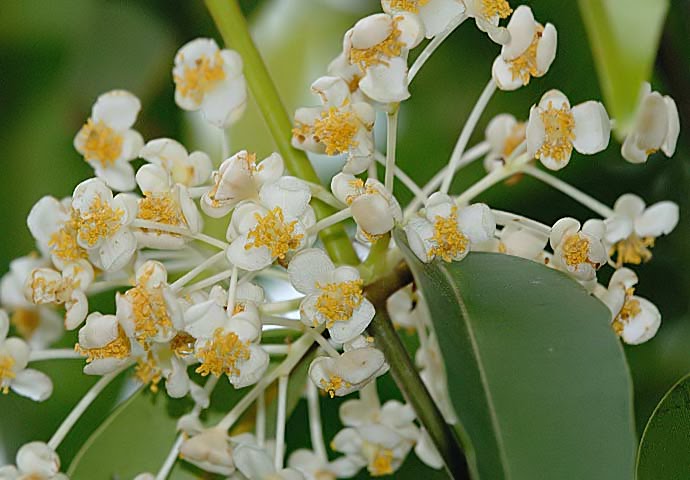
 We must thank these bees. Without them, the flowers would not be fertilised and bear these rather smooth and round
  The fruits turn purplish blue when they are ripe.
 I don't know how many species of planthopper in Singapore. It was my first sighting of this exceptionally small planthopper with a pair of light-blue furry wings which was found underneath a leaf besides the Ardisia shrub.
 I guess this is a species of fly with a pair of long antennae.
 The Leopard Lacewing (Cethosia cyane) was not seen previously by me in MNT though the species has established its permanent residence status in many parts of Singapore.


